What Is the Root Cause of Fibromyalgia?
Researchers have not identified one single cause of fibromyalgia. Current evidence points to altered pain processing in the nervous system, likely shaped by a combination of genetics, sleep disruption, stress biology, illness, injury and other individual factors.

People understandably want one clear explanation for widespread pain, exhaustion, poor sleep and fibro fog. A single answer can feel as if it would point to a single cure. Fibromyalgia, however, is better understood as a complex condition involving several interacting systems rather than one damaged muscle, one infection or one vitamin deficiency.
The National Institute of Arthritis and Musculoskeletal and Skin Diseases describes fibromyalgia as a chronic disorder involving pain and tenderness throughout the body, along with fatigue and sleep problems. Symptoms and possible triggers vary considerably from person to person.
The leading explanation: altered pain processing
The strongest current model centers on the way the nervous system processes pain. Fibromyalgia is often described as a form of nociplastic pain—pain arising from altered pain processing even when there is no clear evidence of ongoing tissue damage or a disease damaging the sensory nerves. This does not mean the pain is imaginary. It means the body’s alarm and volume-control systems may be responding differently.
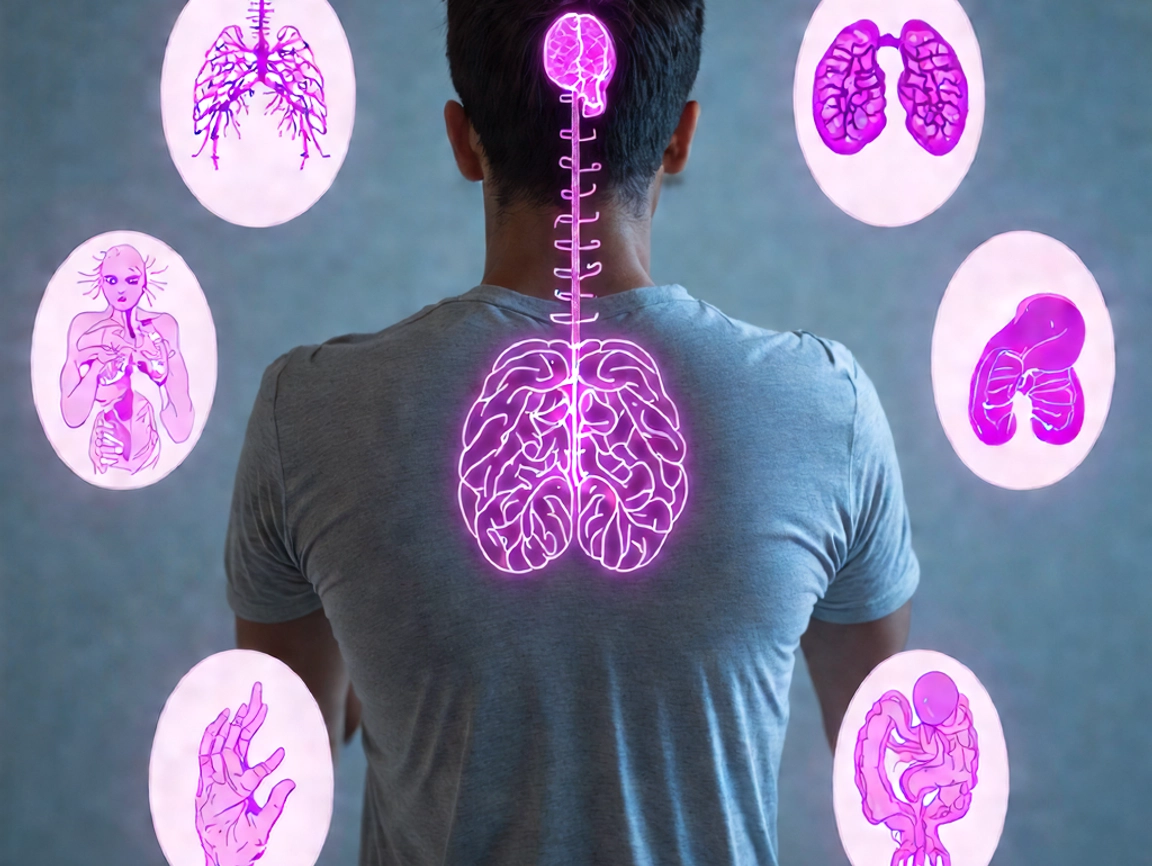
The brain, spinal cord and nerves normally filter, amplify or quiet incoming signals. In fibromyalgia, that balance may shift toward greater sensitivity. Pressure, movement, temperature, stress or ordinary sensory input may feel more painful than expected. Pain-inhibiting pathways may also work less effectively.

The American College of Rheumatology explains that fibromyalgia is not considered an inflammatory or autoimmune disease and that research points to nervous-system involvement. Changes involving chemical messengers such as serotonin and norepinephrine may influence how painful stimuli are experienced.
What factors may contribute to fibromyalgia?
Researchers generally view fibromyalgia as multifactorial. A factor can increase risk, trigger the beginning of symptoms or worsen an existing condition without being the sole root cause.
Genetic susceptibility
Fibromyalgia tends to occur in families. Research suggests that many gene variations, each with a small effect, may influence pain sensitivity and vulnerability. Having a relative with fibromyalgia raises risk but does not make the condition inevitable.
Physical illness or infection
Some people report symptoms beginning after an infection or illness. Researchers have not identified one virus or bacterium that causes all fibromyalgia, and an infection may act as a trigger only in susceptible people.
Injury or surgery
A car accident, surgery or other physical event sometimes occurs before symptoms begin. This association does not mean every injury causes fibromyalgia or that an old injury must be present.
Stress and trauma
Chronic stress or a traumatic event may affect sleep, muscle tension, hormones and pain regulation. Stress can be one contributor or flare trigger, but fibromyalgia is not simply an emotional reaction or a failure to cope.
Sleep disruption
Poor sleep can heighten pain sensitivity, while pain makes restful sleep harder. This two-way cycle may help maintain symptoms, even if sleep loss was not the original trigger.
Other chronic conditions
Fibromyalgia is more common alongside conditions such as rheumatoid arthritis, lupus, irritable bowel syndrome, migraine and temporomandibular disorders. An overlapping condition may add to symptoms without explaining the entire syndrome.
According to MedlinePlus, the cause remains unknown, although researchers suspect a problem with central nervous system pain processing. Possible triggers include physical or emotional trauma, sleep disturbances and infection—but no single infectious cause has been identified.
Are hormones involved?
Fibromyalgia is diagnosed more often in women, and some people notice symptom changes around hormonal transitions. Researchers continue to study sex-related biology, hormones, immune signaling and social or diagnostic factors. Hormones may influence symptoms or risk, but no single hormonal imbalance has been proven to be the universal cause.
Is fibromyalgia inherited?
It is not inherited in a simple, predictable way like some single-gene conditions. Family patterns suggest a genetic contribution, but shared environment and many small genetic effects may be involved. A child or sibling of someone with fibromyalgia is not destined to develop it.
What does not cause fibromyalgia?
Be cautious with anyone selling a test or program that claims to uncover the one hidden cause of fibromyalgia. A deficiency, thyroid problem, inflammatory disorder or sleep disorder can coexist with—or sometimes mimic—fibromyalgia and deserves treatment. That is different from proving it is the universal root cause.
Why is the root cause so difficult to identify?
Fibromyalgia is diagnosed from a pattern of symptoms and clinical evaluation, not a single biomarker. Doctors may use examinations and tests to look for other explanations, but normal results do not mean nothing is wrong. Learn more in our guide to what confirms a fibromyalgia diagnosis.
Several challenges make cause-and-effect difficult to untangle:
- Symptoms can begin gradually, so there may be no obvious starting event.
- The same trigger does not lead to fibromyalgia in everyone.
- Pain, sleep, mood, stress and activity influence one another in both directions.
- People with the same diagnosis can have different dominant symptoms and overlapping conditions.
- A factor associated with fibromyalgia is not automatically a cause.
A primary care clinician or rheumatologist can evaluate widespread pain and rule out other conditions. Our article on the best doctor to see for fibromyalgia explains when other specialists may be useful.
What does this mean for treatment?
Not knowing one root cause does not mean nothing can help. Because fibromyalgia affects several systems, treatment is usually individualized and combines approaches. The goal is to lower symptom intensity, improve sleep and function, and interrupt cycles that keep the nervous system on high alert.
- Gradually increased, appropriately paced physical activity.
- Sleep habits and evaluation for sleep apnea, restless legs or another sleep disorder when indicated.
- Medication selected for the person’s symptoms, health history and side-effect risks.
- Pain-coping and stress-regulation skills, including cognitive behavioral approaches.
- Treatment of migraine, depression, anxiety, IBS, arthritis or other overlapping conditions.
- Pacing daily activity to reduce the repeated “push and crash” cycle.
The fact that psychological or behavioral therapies can help does not mean the illness is psychological. These tools can change stress responses, sleep and pain regulation—just as rehabilitation can help pain without implying that the pain was invented. For additional ideas, see our guide to what not to do when you have fibromyalgia.
Frequently asked questions
What is the main cause of fibromyalgia?
No single main cause has been proven. Current research most strongly supports altered pain processing in the central nervous system, with genetic, biological and environmental factors contributing differently from person to person.
Is fibromyalgia caused by trauma?
Physical or emotional trauma can precede fibromyalgia in some people and may act as a trigger. Many people with trauma never develop fibromyalgia, and many people with fibromyalgia cannot identify a traumatic starting event. Trauma is therefore not a universal cause.
Is fibromyalgia an autoimmune disease?
Fibromyalgia is not currently classified as an autoimmune disease. It does not typically produce the tissue inflammation or organ damage seen in autoimmune disorders. However, fibromyalgia can coexist with lupus, rheumatoid arthritis or another autoimmune condition.
Can a virus cause fibromyalgia?
Some people develop symptoms after an infection, but researchers have not identified one virus that causes fibromyalgia. Infection may be one possible trigger in a susceptible person rather than the root cause of every case.
Does fibromyalgia come from the muscles or the brain?
The pain is felt in muscles and soft tissues, but research points primarily to altered processing within the nervous system rather than damage throughout the muscles. The brain, spinal cord, peripheral signals, sleep, stress biology and other systems may all contribute.
Can vitamin D or magnesium deficiency cause fibromyalgia?
Deficiencies can cause or worsen pain, weakness, fatigue or sleep problems and should be evaluated when appropriate. Correcting a deficiency may improve those symptoms, but neither vitamin D nor magnesium deficiency has been established as the single cause of fibromyalgia.
Can fibromyalgia be cured by fixing the root cause?
There is currently no proven cure or one root-cause treatment. Symptoms can often be managed with a personalized combination of movement, sleep care, medication, behavioral strategies and treatment of overlapping conditions.
Why did my fibromyalgia seem to start suddenly?
An infection, injury, surgery, period of severe stress or major sleep disruption may coincide with onset. In other cases, subtle symptoms may have been developing before a noticeable flare. A clinician should assess sudden or changing symptoms rather than assuming fibromyalgia explains everything.
The bottom line
The most accurate answer is that fibromyalgia has no single known root cause. It appears to involve amplified or altered pain processing in a susceptible nervous system, with genetics, sleep, illness, injury, stress and other health conditions potentially shaping each person’s experience. This complex explanation validates the pain—it does not diminish it—and it supports a treatment plan that addresses more than one pathway.
Medical note: This article is for general education and is not a diagnosis or personalized medical advice. New, severe or changing symptoms should be evaluated by a qualified healthcare professional, because other conditions can resemble or coexist with fibromyalgia.