Fibromyalgia supplements
What Is the Best Vitamin to Take for Fibromyalgia?
There is no single vitamin proven to treat fibromyalgia for everyone. Vitamin D is the most reasonable vitamin to discuss when a blood test shows deficiency, because correcting low vitamin D may reduce pain for some people. Taking extra vitamins when levels are already adequate may provide no benefit and can cause harm.

Fibromyalgia can cause widespread pain, fatigue, poor sleep and cognitive difficulty. Vitamin and mineral deficiencies can sometimes produce overlapping symptoms, which makes supplements appealing. But improvement after correcting a deficiency is not the same as evidence that everyone with fibromyalgia should take the same product.
The National Center for Complementary and Integrative Health states that vitamin D supplements may reduce pain in people with fibromyalgia who are deficient. For most other dietary supplements, the evidence is insufficient.
Vitamin D: The Most Promising Option When Levels Are Low
Vitamin D helps the body absorb calcium and supports bone, muscle, nerve and immune function. Deficiency can contribute to bone pain, muscle weakness and other symptoms that may be difficult to distinguish from fibromyalgia.
A blood test called serum 25-hydroxyvitamin D is commonly used to evaluate vitamin D status. Whether testing is appropriate depends on your symptoms, risk factors and clinician’s judgment.
Who may be more likely to have low vitamin D?
- People with limited sun exposure.
- People with darker skin, because melanin reduces vitamin D production from sunlight.
- Older adults.
- People with certain digestive or absorption disorders.
- People with obesity or a history of bariatric surgery.
- People taking certain medications that affect vitamin D metabolism.
If a deficiency is confirmed, a healthcare professional can recommend an appropriate amount and follow-up testing. The correct plan depends on the starting level, kidney health, calcium level, diet, medications and other conditions.
Vitamin B12: Helpful for Deficiency, Not a Proven Fibromyalgia Cure
Vitamin B12 supports red blood cells and nerve function. Deficiency may cause fatigue, weakness, anemia, numbness, tingling, balance problems or cognitive changes—symptoms that can overlap with fibromyalgia.
Risk can be higher in vegans and some vegetarians, older adults, people with pernicious anemia or digestive disorders, and people taking certain medicines such as metformin or long-term acid-suppressing drugs. A clinician may use blood tests and, in selected cases, additional markers to evaluate B12 status.
Correcting a true deficiency is important, but evidence does not show that high-dose B12 is a reliable treatment for fibromyalgia in people whose levels are already adequate.
What About Magnesium?
Magnesium is frequently promoted for muscle pain, sleep and fatigue, but it is a mineral—not a vitamin. Research on magnesium specifically for fibromyalgia is limited and inconsistent.
Supplemental magnesium can cause diarrhea and may interact with antibiotics, osteoporosis medications, diuretics and other drugs. Kidney disease can increase the risk of magnesium accumulation. The NIH lists 350 mg daily as the adult upper limit from supplements and medications, not counting magnesium naturally present in food. A clinician may use different amounts for a medical indication.
Other Vitamins and Supplements
| Supplement | Why people consider it | What the evidence or safety concern means |
|---|---|---|
| Vitamin D | Low levels may contribute to musculoskeletal symptoms. | Most reasonable when deficiency is confirmed; excessive amounts can be toxic. |
| Vitamin B12 | Deficiency can cause fatigue, anemia and nerve symptoms. | Important to correct when deficient; not proven as a universal fibromyalgia treatment. |
| Magnesium | Promoted for muscle function and sleep. | Fibromyalgia evidence is insufficient; diarrhea, kidney concerns and drug interactions matter. |
| Iron | Iron deficiency can cause fatigue and restless legs symptoms. | Do not take iron without evidence of deficiency; excess iron can be harmful. |
| Vitamin B6 | Included in many energy or nerve-support products. | Long-term high intake can itself cause nerve damage and tingling. |
| Coenzyme Q10 | Marketed for energy and muscle symptoms. | Small studies are not enough to establish it as standard treatment; interactions are possible. |
| Multivitamin | May fill limited dietary gaps. | Does not target fibromyalgia and can duplicate nutrients from other supplements. |
Food First When Possible

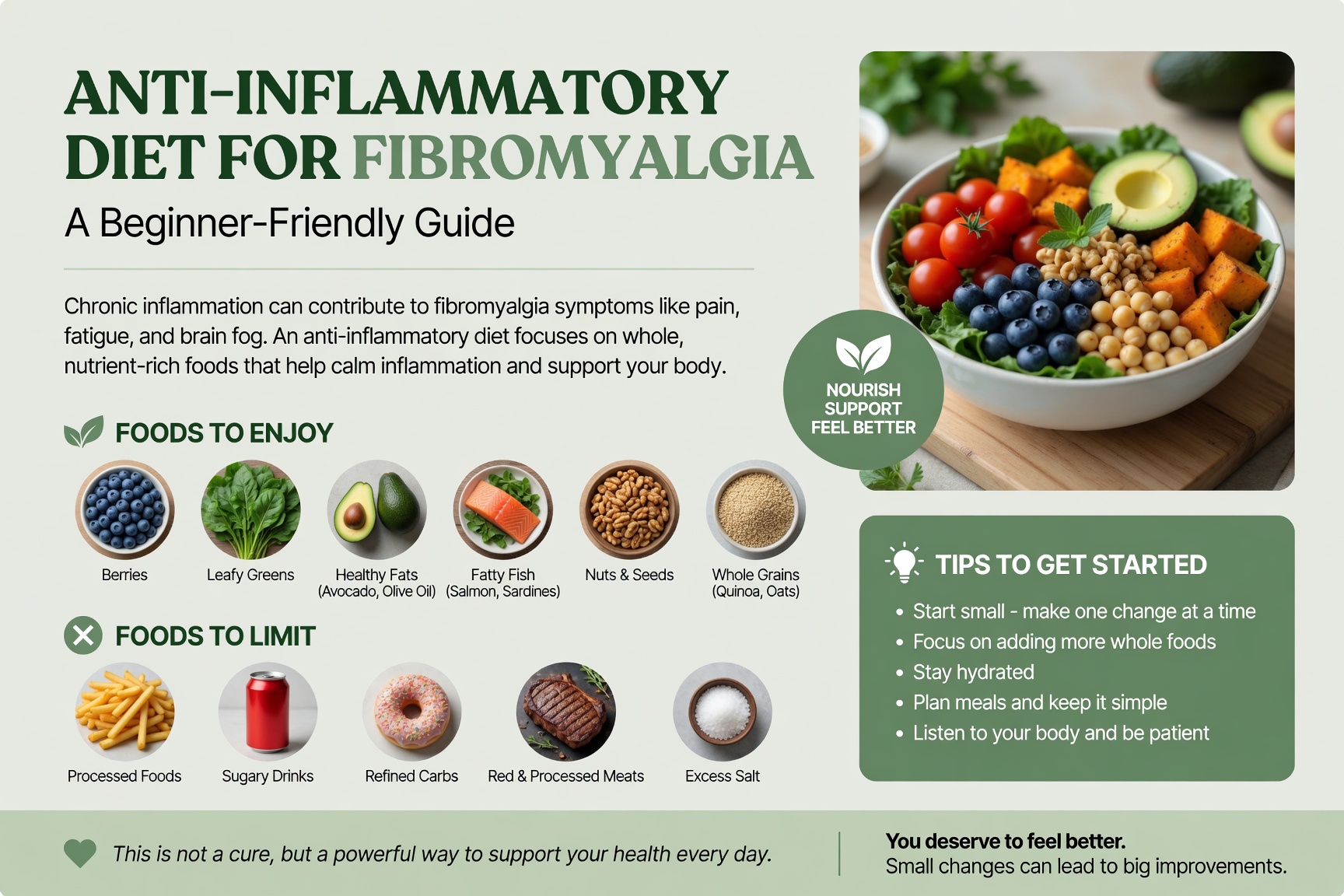
Food cannot always correct a significant deficiency, but it is a useful foundation. Vitamin D sources include fatty fish and fortified foods. Vitamin B12 occurs naturally in fish, meat, poultry, eggs and dairy, and is added to some cereals and plant-based products. Magnesium is found in beans, nuts, seeds, whole grains and leafy greens.
If pain or fatigue makes cooking difficult, practical options include frozen vegetables, canned salmon, prewashed greens, eggs, yogurt, fortified cereals and low-sodium beans. Dietary needs vary with allergies, kidney disease, diabetes, digestive conditions and other health concerns.
Questions to Ask Before Taking a Supplement
- Could my symptoms indicate a deficiency worth testing?
- What exact symptom are we trying to improve?
- Could this interact with prescriptions or other supplements?
- Is it safe with my kidney, liver, heart or digestive condition?
- How long should I try it before deciding whether it helps?
- Will I need a repeat blood test?
- Does the product have independent quality verification?
Supplement Interactions People Often Miss
“Natural” does not mean interaction-free. Vitamin K can interfere with warfarin. Magnesium can reduce absorption of certain antibiotics and osteoporosis medicines. Biotin can distort some laboratory tests, including tests used for thyroid and heart-related evaluation. Calcium and iron can also affect medication absorption.
Give your clinician and pharmacist a complete list, including gummies, powders, teas and products marketed for sleep, immunity or energy.
Vitamins Should Not Replace a Complete Treatment Plan
The NIAMS treatment overview describes fibromyalgia care as a combination of medication, movement and psychological or behavioral approaches. Correcting a nutrient deficiency may be one part of care, not a replacement for diagnosis, sleep evaluation, appropriate activity or prescribed treatment.
Continue with our guides to fibromyalgia medication choices, the daily struggles of fibromyalgia and natural approaches for chronic pain and fatigue.
Frequently Asked Questions
What is the best vitamin for fibromyalgia?
No vitamin is best for everyone. Vitamin D is the most reasonable vitamin to discuss when deficiency is confirmed. Vitamin B12 may be important when a person is deficient, but neither is a universal cure.
Should everyone with fibromyalgia take vitamin D?
No. Benefit appears most plausible in people with low vitamin D. Testing and dosage decisions should consider individual risk factors, health conditions and medications.
Can vitamin D reduce fibromyalgia pain?
NCCIH reports that vitamin D may reduce pain in people with fibromyalgia who are deficient. Evidence does not show that taking more helps people whose levels are already adequate.
Does vitamin B12 help fibro fog or fatigue?
B12 may improve symptoms caused by B12 deficiency. It has not been proven to consistently treat fibro fog or fatigue in people with normal B12 status.
Is magnesium good for fibromyalgia?
Evidence remains insufficient to recommend magnesium as a standard fibromyalgia treatment. It may cause diarrhea, interact with medicines and become unsafe in some people with kidney problems.
Can I take vitamin D, B12 and magnesium together?
Sometimes, but safety depends on total amounts, kidney function, test results, other medications and additional products. A clinician or pharmacist should review the complete combination.
How quickly should a vitamin help?
That depends on the nutrient, severity and cause of deficiency, dose and symptom being monitored. Ask your clinician what improvement to expect and when follow-up testing is appropriate.
The Bottom Line
There is no universally best vitamin for fibromyalgia. Vitamin D deserves consideration when a blood test confirms deficiency, and B12 should be corrected when low. The safest approach is to identify a specific need, choose an appropriate product and amount with professional guidance, and avoid assuming that higher doses produce better results.
Last medically reviewed: August 2026. Sources include NCCIH, NIAMS and the NIH Office of Dietary Supplements.